Software Delivery: Anti-Patterns and Accelerators
This guide illustrates common software delivery anti-patterns that hinder velocity and quality, contrasting them with modern accelerators that drive efficient, high-quality engineering.
Overview
The shift from traditional, siloed development to modern, collaborative DevOps practices is essential for accelerating delivery.
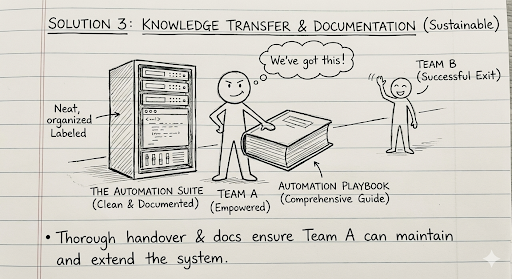
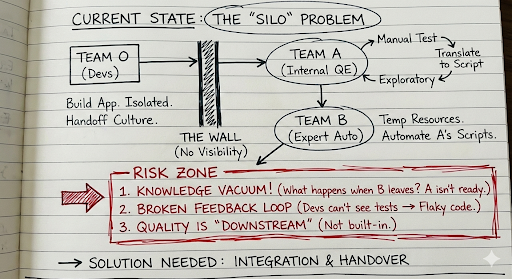
1. Anti-Patterns: The "Silo" Problem
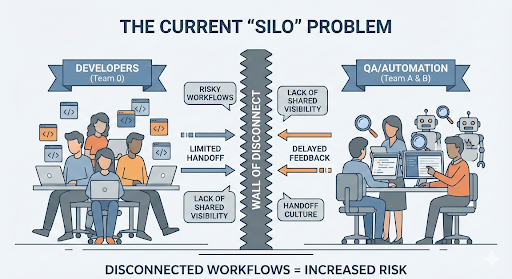
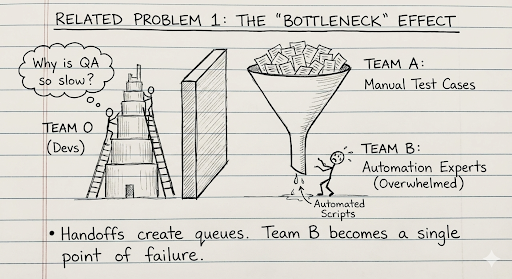
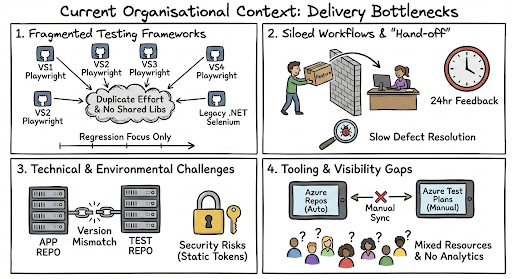
Traditional software development often suffers from the "Silo" effect, where Development and QA operate as separate entities. This separation creates a "Wall of Confusion," leading to delayed feedback, risky releases, and a "throw it over the wall" mentality.
The Disconnect
Developers build code in isolation, and QA tests it only after a "handoff." This results in late discovery of bugs, where they are most expensive to fix.
Waterfall & Delayed Feedback
In a Waterfall approach, testing is a phase that happens at the end. If defects are found, the entire process loops back, causing significant delays.
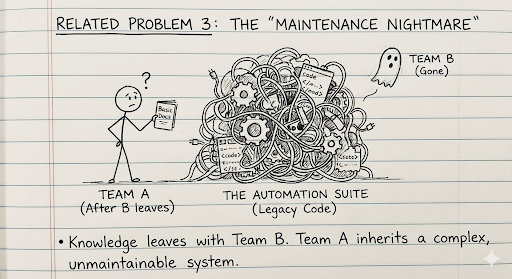
2. Anti-Patterns: Maintenance Nightmares
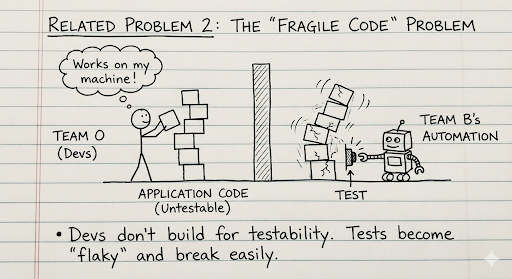
Without modern practices, codebases can become fragile and difficult to maintain. "Spaghetti code" and lack of automated tests make every change risky.
Fragile Code
When code is tightly coupled and lacks tests, fixing one bug often introduces two more.
The Maintenance Trap
Teams spend more time fixing bugs in legacy code than building new features.
3. Accelerators: Collaborative DevOps Pipelines
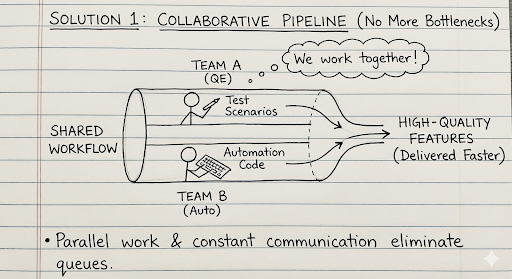
The solution to silos is a collaborative, automated pipeline where Development, QA, and Operations work together.
The Collaborative Pipeline
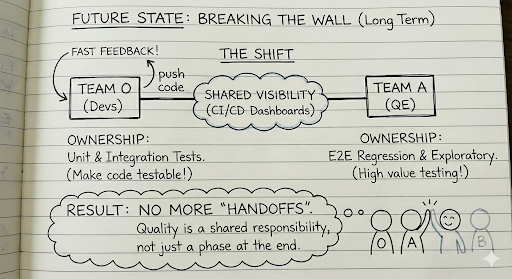
Quality is owned by the entire team. Feedback loops are short, and automation is integrated at every step.
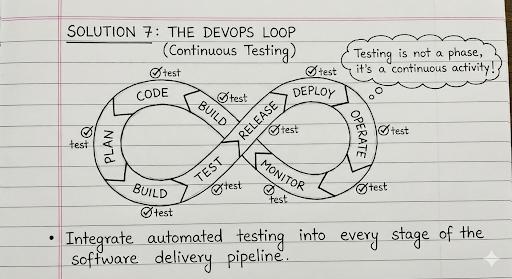
Continuous Testing Loop
Testing is not a phase; it's a continuous activity that happens throughout the DevOps loop (Plan, Code, Build, Test, Release, Deploy, Operate, Monitor).
4. Accelerators: Shift Left & Quality Gates
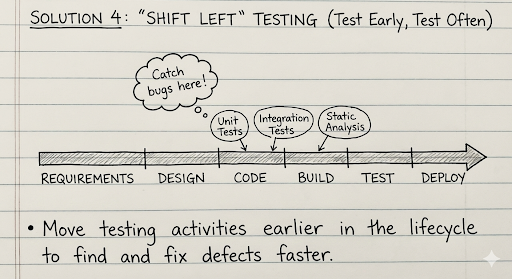
To reduce risk and cost, testing must "Shift Left"—happening as early as possible in the development lifecycle.
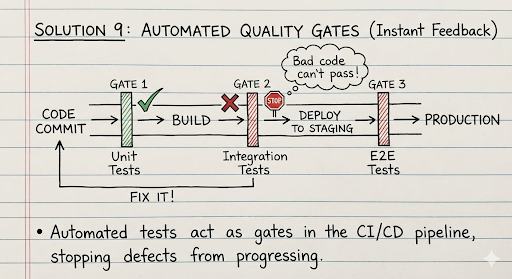
Automated Quality Gates
Automated tests (Unit, Integration, E2E) act as gates in the CI/CD pipeline, preventing bad code from progressing to later stages.
Shift Left Testing
Moving testing to the left means developers run tests before committing code, ensuring higher quality at the source.
5. Accelerators: Modern Architecture & Scalability
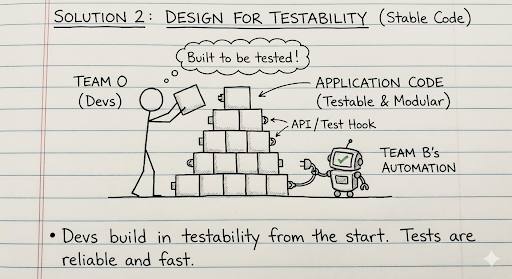
Modern architecture patterns support testability and scalability.
Scalable Frameworks
Using modular, scalable frameworks allows teams to add features without breaking existing functionality.
Stabilizing Frontend
Techniques like mocking backend services allow frontend development and testing to proceed in parallel, stabilizing the pipeline.
6. Accelerators: The "Whole Team" Approach
Modern quality engineering requires a cultural shift in how teams are structured and how they view quality.
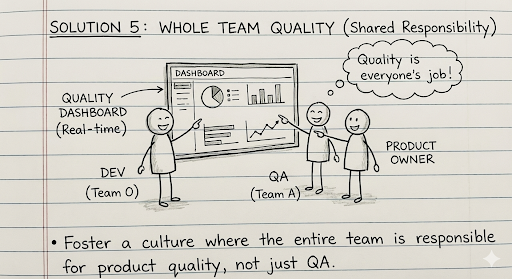
Whole Team Quality
Quality is not just the responsibility of testers; it is the shared responsibility of the Product Owner, Developers, and QA.
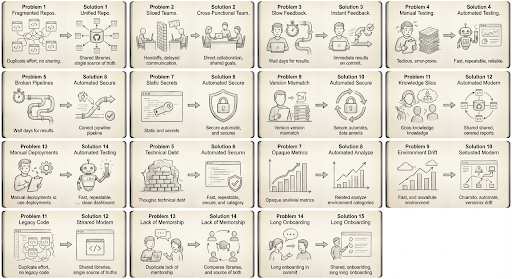
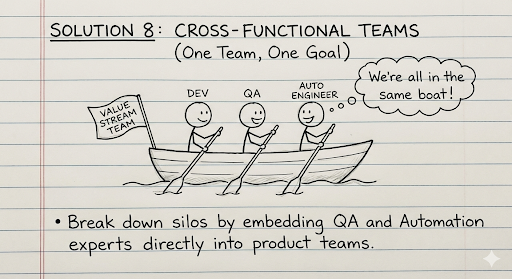
Cross-Functional Teams
Teams should be cross-functional, containing all the skills necessary to deliver a feature from concept to production.
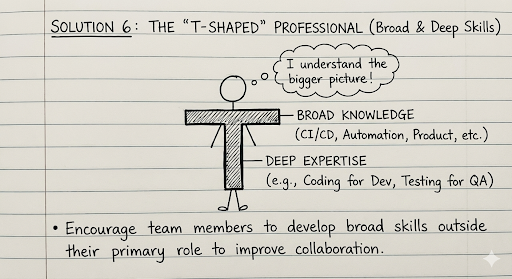
T-Shaped Professionals
Team members should be "T-Shaped"—having deep expertise in one area (e.g., coding or testing) but broad knowledge in others, facilitating better collaboration.
7. Implementation Steps
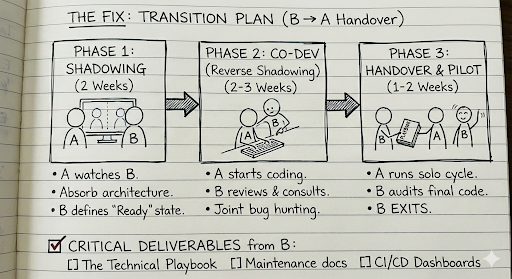
To transition from anti-patterns to accelerators, teams should follow these actionable steps:
- Establish a Definition of Done: Create a strict, shared understanding of what it means for a task to be complete, including testing, code review, and automated verification.
- Implement Automated Quality Gates: Integrate unit, integration, and E2E tests into your CI/CD pipelines to prevent defects from reaching higher environments.
- Adopt Test-Driven Development (TDD): Encourage writing tests before code to ensure testability and focus on requirements.
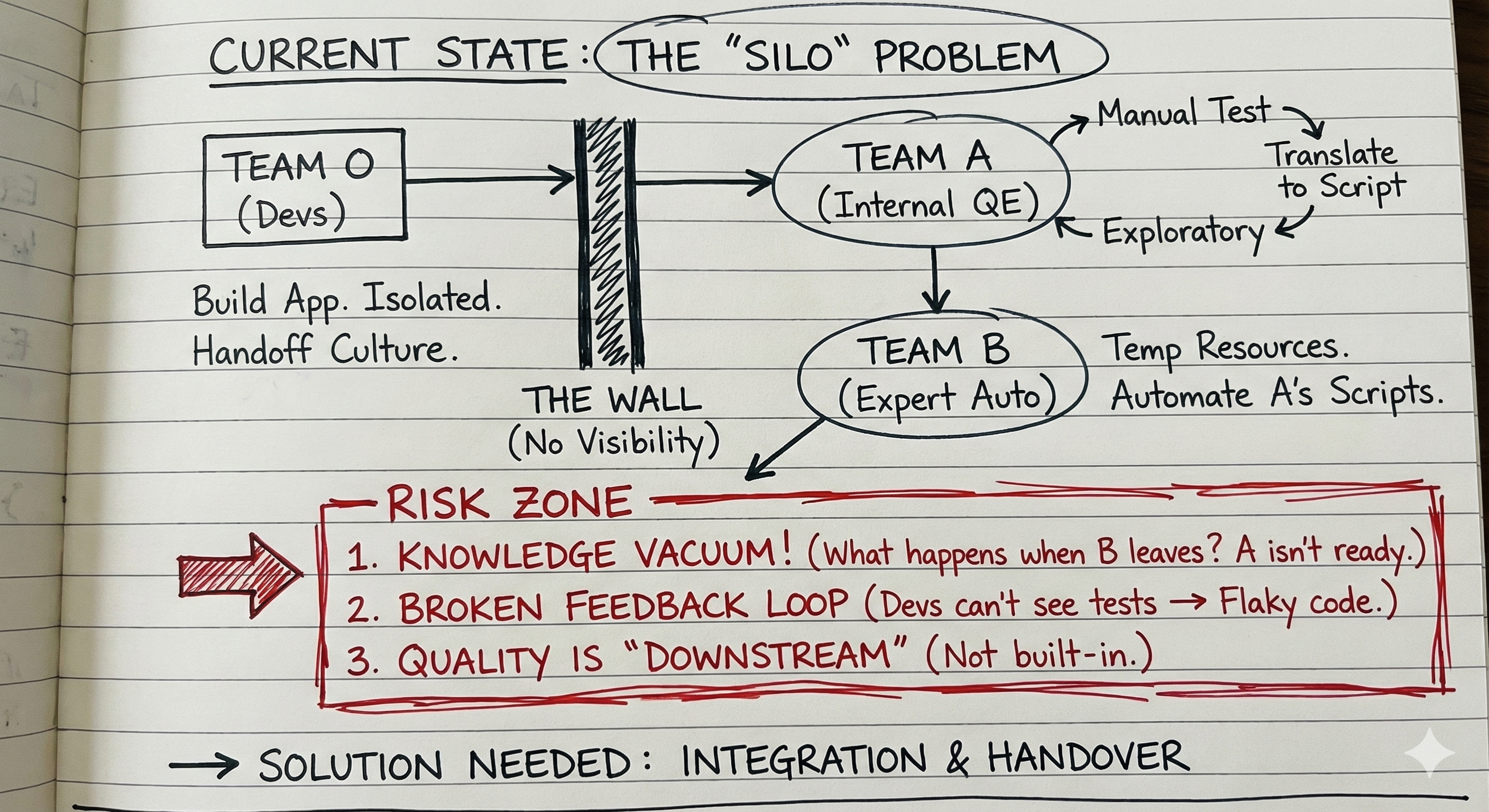
- Foster Collaboration: Break down silos by encouraging pairing, cross-functional team structures, and shared ownership of quality.
- Invest in Tooling: Utilize modern frameworks (like Playwright) and AI tools (like Copilot) to reduce boilerplate and increase test coverage.